

Choosing A School For A 4-Year-Old
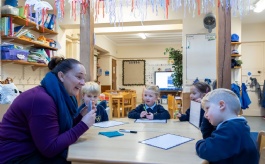
What Really Matters When Choosing a School for a 4-Year-Old: A Perspective from Nadia Ward, Head of Park School
Choosing the right school for a four-year-old is a uniquely important decision. At this stage of life, children are not defined by academic outcomes or test performance; they are shaped by the relationships they build, the security they feel, and the curiosity they are encouraged to explore.
As Head of Park School, I believe deeply that the early years lay the foundation for everything that follows, not only academically but in the development of character, confidence, and a sense of self.
At Park School, we hold the view that education at ages three to five should nurture hearts as well as minds. Here are the factors I encourage parents to consider when choosing a setting for their child:
1. Warm, Responsive Relationships With Adults
This is, without question, the single most important factor in a child’s early education. Children in Reception learn best when they feel safe, understood, and genuinely cared for. You should see teachers who crouch to speak at a child’s level, who know each child as an individual, and who guide gently rather than direct abruptly. Calm voices, caring support staff, and routines that help children regulate their emotions create the emotional safety that allows learning to flourish. At Park School, our early years practitioners build nurturing, trusting relationships, this is the essential soil in which both learning and character grow.
2. Play-Based Learning, Not Early Formal Academics
At four and five, children learn most powerfully through play. Whether they are imagining new worlds, exploring outdoors, mixing paint, or squelching in mud, they are developing language, problem-solving, creativity, and resilience. A school that prioritises worksheets over exploration is not supporting healthy development. A rich play-led environment leads to stronger literacy and numeracy later, and it develops the curiosity we value so highly at Park School. Play is also where character takes root: perseverance in building a tower, kindness in sharing resources, problem-solving during a disagreement.
3. Social Development as a Core Priority
Four and five-year-olds are learning how to be part of a community. They need support to share, collaborate, resolve small conflicts, and build friendships. Ask schools how they build social confidence, especially for shy children. At Park School, we believe these early social experiences help shape empathy, integrity, and courage, key components of our teaching on character within the curriculum. Performances to others such as nativities and seasonal events are crucial to building confidence.
4. Meaningful Outdoor Learning
Movement is learning. Outdoor play is not a luxury; it is essential. Daily access to outdoor space, whether through forest school, climbing structures, or sensory play, helps children develop physically, emotionally, and socially. Nature is also a natural teacher of character; patience, curiosity, teamwork, and wonder are all found outdoors. At Park School, our extensive outdoor learning spaces, including our Forest School and Beach School sites, are used regularly by our Reception classes. Our Forest School lead, Mrs. Latini, is a qualified Forest School practitioner with many years of experience and seamlessly links the classroom curriculum to the great outdoors.
5. A Language-Rich Environment
Language at four predicts long-term academic outcomes. Look for classrooms full of stories, rhymes, conversations, and rich vocabulary. Children should be encouraged to talk, question, imagine, and express themselves. Storytelling and language immersion underpin both learning and character development at Park School, and our teaching of phonics includes the characterisation of each letter of the alphabet, with our experienced and skilful teaching staff able to make learning fun and accessible to all.
6. A Gentle, Attachment-Aware Approach to Behaviour
At this age, behaviour is communication. Schools should prioritise emotional regulation, offer predictable routines, and avoid punitive systems. Ask how staff support children who struggle to settle. Park prides itself on pastoral care and its experienced staff have a great many techniques to connect with children that even includes a live turtle that lives in Miss Whitbread’s pastoral room!
7. Skilled Early Years Teachers Who Understand Child Development
Reception teachers are specialists. Stability and expertise matter. High-quality early years educators understand development deeply and create environments that stretch, support, and nurture.
8. An Environment That Encourages Independence
Simple choices, such as selecting resources, putting on coats, and choosing activities help children build confidence, responsibility, and independence. These small moments are the earliest steps in developing character.
9. Early Identification of Additional Needs
A good school notices and supports early. Communication with parents should be open, early, and reassuring, never reactive or panicked.
10. The Right Fit for Your Child
Every child is different. The best school for one may not be right for another. Consider their temperament, energy, sensitivities, and emerging interests.
In summary, what matters most at age four is simple:
- Warm, responsive adults
- Play-based, language-rich learning
- A nurturing environment that honours each child’s character and potential
At Park School, we believe the early years are where character education begins, shaping children who are not only prepared for learning, but prepared for life.